
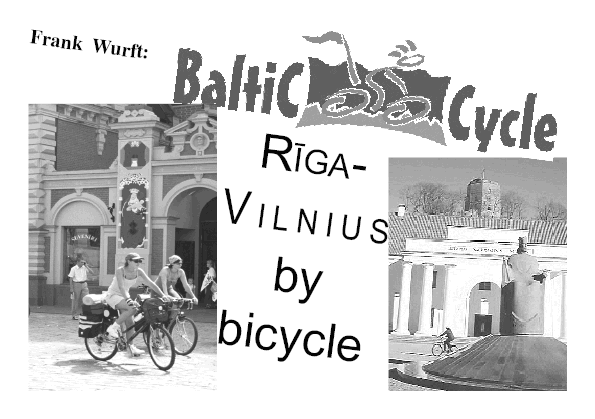
[LT3] Route Description Riga-Vilnius by bicycle, Lithuanian part
RouteMap
[iframe src=”https://cycling.waymarkedtrails.org/#route?id=232057&map=8!56.3598!25.9026″]
https://cycling.waymarkedtrails.org/#route?id=269985&map=8!56.3598!25.9026
you may order the paper version of the booklet on shop.balticcycle.eu here:

Pictures and maps
Latvia
https://photos.google.com/u/1/album/AF1QipM1AFnmEkdDFNC4JmnIPs8tUd_QFHcvpt0DRy0
Lithuania
https://photos.google.com/u/1/album/AF1QipMbaMjTp69QJ9_wxeBwaSzWfauHWfH3ygc2-R0
[expand title=”LT3 Route Description Riga-Vilnius, Lithuanian part”]
This is the LITHUANIAN part of the Route of the route description from Riga to Vilnius via the East part of Latvia and Lithuania, the so called “Land of Lakes” from 2006.
And here are all pictures and maps from the booklet:
Oh!, I see,these are the texts from a bike tour in 2004 which became the basis for the 2006 booklet
2004 06 23 Wednesday (Nordkapp – Olympia) (I)
Route
Sleeping Place in LV 4 km to the border
Zarasai-N102-7 kmleft10 km-Turmantas-After 5km at the crossing left-10 kmVisaginas-12 km to Rimðë
Sleeping Place: School/Stadium in Rieðë
Programme
10.0Zarasai
11.0Turmantas
15.00 Visaginas: Errection of Peace Pole
Zarasai
First mentioned 1387. Then it was a territory of the old Baltic Tribe of the Selonians. Probably the name itself comes from the Selian word “Eþeras” which means “lake”. In Polish it’s called Jeziorasy in German Ossersee. In 1836 the Russian tsar passed by and decided to name this place for the honour of his son “Novoaleksandrovsk”, later it was tried to name it Eþerënai and just finally in 1929 the nowadays name was officially adopted. The “golden years” of the town are called 1830-36 when the road Sankt Peterburg-Warsaw was build. The number of inhabitants rose by seven times! As well the Russian city planning system was introduced as it stays until our days. At not to forget, that it was one of these small Jewish townships called shtetl before the war. You may visit the Jewish cemetery or the former place of the Synagogue (in Sinagogos g.) in order to commemorate this.
Zarasai town covers an area of 1,750ha and has a population of about 8,000. The old part of the town is an urbanistic monument. It is valued for the specific regular plan with a radial-ring street network and the main accent square, concentring all the radial streets. It is the only plan of this kind not only among the so-called Russian-type town planning in the republic, but also among all the Lithuanian towns. The street network, the square plan, construction fragments, as well as the town skyline and the environment are protected by the State. The street network perfectly fits the unique landscape. The region boasts of rich cultural heritage. At present you may find 30 historical monuments in the district: birthplaces or graves of famous people and monuments to them. The region territory contains 69 archeological monuments: 29 mounds, 24 barrows, 10 ancient burial places, 6 archeological stones. There are 14 architectural monuments and 71 valuable art works, most of them in churches. 3 state-owned, 5 public or private museums and an art gallery are open to visitors. However, the most valuable aspect of Zarasai district is its landscape. Impressive woods, mostly pinewoods, cover over 30 percent of the region territory. Pines account for over 65 percent of the whole forested area. There are two regional parks Graþutës and Sartø. Over 300 lakes located in the region cover 13,391.1 ha,i.e, about 10 percent of the territory. The majority of them are small lakes, within the area of 10 ha. 39 lakes are situated in protected territories. Among the 8 rivers passing through the region, the longest is Ðventoji (44.7 km). Evidently, the future of Zarasai district is development of tourism and recreation. Today the region can offer accommodation for 600 visitors in 4 different locations. There are 23 long-and short-term campsites in Graþutës and Sartø regional parks and other locations.
A famous local figure was the medic and anthropologist D. Bukontas who tried to revive the “Lithuanian spirit” in the town, eg. by founding a Lithuanian school. In the city square you may find a monument to him.
The town is surrounded by seven lakes and therefore popular for holiday-makers from Kaunas, Vilnius, St. Peterburg and Moscow.
Places to visit
Museum, church of the Ascension of Holy Mary
Big Island
Jewish cemetery
Zarasø kraðto muziejus, D. Bukonto g. 20/1
Hotels | Catering | Shops | Internet
Internet café: Vytauto 1a/2a (Palace of culture), 8-22
Restaurant Monopolis, Sëliø a. 8, Zarasai, I-IV: 11-24, V-VI: 11-02.
Pizzeria Rijo picà, D. Bukonto g. 5, Zarasai, I-V: 10-23; VI-VII: 10-01
Cafe Svaja, Sinagogos g. 1c, Zarasai, 8-17 val., VI, VI: -savaitgaliais nedirba
Cafe Bar Diana, Ðiauliø g. 3, Zarasai, I-V: 8-17., VI, VII: 8-21.
Cafe, Vytauto g. 49/2, Zarasai, I-VI: 10-20; VII: –
Cafe Bar Pikø Dama, Sarakiðkiø km., Zarasø sen. www.bpl.lt, I-IV, VII: 11-24, V-VI: 10-03
Cafe Naktigonë, Vilniaus g. 16
Shop Norfa, Vytauto 54, Dariaus ir Girëno 29/12
Shop Saulutë, Savanoriø 18, Vytauto 10
Zarasø district TIC, Sëliø aikðtë 22, Zarasai Tel./Fax: +370-385-51230 / +370-682-40988; z.rejest@is.lt
2004 06 23 Wednesday (Nordkapp – Olympia) (II)
Turmantas
Turmantas is a small town 19 km east of Zarasai. Its first known owners were the dukes Tûrai who probably gave also the name to town (Mantas is a popular personal name). In the park of Smalvos there is one old living house left from those times, but it is in a bad state. Furtherone we may get to lake Drûkstas, which is rich of fish (
if you like some fishing?) and present to use the three-country border between Lithuania, Latvia and Belarus. Lake Drûkðiai is with 45 m2 the biggest lake in Lithuania and has 5 islands, the biggest with 21 ha. On it once stood a castle which was destroyed by the Swedes in 1955.
Cafe, I-V: 8.30-21, VI, VII: 8.30-24.
Visaginas
Visaginas is the youngest city in LT, build in the 80s for the workers of Ignalina Nuclear Power Plant. It is a totally artificial city and its the only town in Lithuania where the absolute majority of its inhabitants are Russians. Therefore its an example of the Soviet age blockhouses in cement, but surrounded by trees and on the border of the beautiful lake Visaginas (219,6 ha big, up to 6,6 m deep). You may even take a rest on the beach here; look over to the small islands and rent bicycles or boats. The new bridge into the lake is the pride of the inhabitants. There are even more sporting facilities a stadium, a tennis court, a swimming pool and a sauna. In summer time concerts are happening in the town, o which the most famous is the international Visaginas Country festival. Your eye may enjoy a variety of tree and in autumn mushrooms and berries in the surrounding (to pick them, is a kind of national sport in Lithuania).
Hotels | Catering | Shops | Internet
Hotel & Restaurant “Aukðtaitija”, Veteranø g. 9
Hotel “Gabriella”, Bar Avakona (10-24), MagElita(12-22), Jaunystës g. 21
Grilis, Sedulinos alëja 5b
Pasaka, Parko 10, 11-22
Perlas, Vilties 1, 11-24
Uþeik, Taikos 72a
Internet center Akvanet, Parko 4; 10-18
Internet center (Public Libary), Taikos 52, I-VI: 11-18/19
Shop IKI, Taikos 80a (8-20)
Shop Norfa, Sedulinas 20 (8-20)
Places to visit
Akvariumø salonas muziejus (opened in 2000). First private exposition of this kind in Lithuania. On 140 m2 you may see 14 aquariums with 600 and 700 Litres each and 12 with 80-180 Litres. They contain more then 60 species of tropic fish from small up to Piranha of several kilo weight. Jaunystës g. 21, I-VI: 12-19
Ignalinos atominës elektrinës Informacijos centras, I-V: 8-16. Gives you a look into the work of this Soviet Nuclear Power Plant of the same type as Chernobyl in the Ukraine, which caused the biggest nuclear accident in the civil use of this energy source.
Household Museum “Aukðtaièiø pirkia”
St. Apostle Paul Church (started in 1991)
2004 06 24 Thursday (Nordkapp – Olympia)
Route
Rimðë-22-Naujasis Daugeliðkis (Senojo Daugeliðkio piliakalnis)-N112Vidiðkës-6-Ignalina-
+ Round trip in National Park: Vaiðniûnai-Ginuèiai
Sleeping place:
Rojus: A. Hrebnicki memorial museum
Dukðtas
Dukðteliai: Manor house / Estate, Mound: “Senasis Dukstas”
Service
Ignalina:
Cafe “Nendrë”, Laisvës st. 62, I-IV: 10-22; V-VII: 10-24
Lithuanian Winter Sport Café, Sporto st. 3, I-VII:9-24
Railway station canteen, I-VII: 10-15, Geleþinkelio st.
Kavine Paluðë, Vasario 16-osios
Internet in Public Library, Atgimimo g. 20/1
Palûðë
Aukðtaièiai inn, I-VII: 8-24
Cafe “Palûðë” I-VII: 11-23
Cafe “Pirato uþeiga”, Opened only in summer. I-VII: 9-24
Strigailiðkis village
Cafe “Padvarës karèema”; I-VII:12-24
Ginuèiai village
Ginuèiai snack-bar, I-VII: 10-24
Main Attractions of today
Agriculture Museum in Stripeikiai village, Ancient bee-keeping museum
Ladakalnis Hill
The legendary Ginuèiai Mound.
Works of carpenters on the shores of Lûðiai Lake / village Meironys.
Visit the wooden 18th century church in Palûðe.
Botanical Path: enjoy the variety of the parks vegetation.
Ethnographical villages: be astounded by these authentic rural buildings!
Cascades of Ginuèiai Water-mill.
Architectural monuments
St.Josephs Church in Palûðë
St.Jonas church in Mielagënai
Estate and the park (18th cent.) in Senasis Dûkðtas
Ethnographic villages: Mëèionys, Senosios Katinautiðkës, Kukutëliai, Salos II
Historical monuments:
A.Hrebnickis housemuseum in the Rojus farm.
Ginuèiai water mill
Gaveikënai water mill
Dûkðtas environs
Sokiðkiai mound called Juodþeminis hill. This one stands on Samanis lake shore and is surrounded by a valley from three sides. Mound slopes are quite steep; 18-19 m high. The western hill reaches a highland which rises for 4 metres. At the top of the mound there is a ground, which is oval with an elevated centre; its diameter is 55-65 m. There is no sign of fortifications, but some ancient village’s relics were found here.
Old Dûkðtas (Dûkðteliai) mound and the ancient village. It is the oldest mound in the area between Parsvëtas and Samanis lakes. There were found smithereens of pots and animal bones. Vaðkoniai mound called “Kalvelë” The mound has a steep slope and a convexed ground. It is not damaged by any bulwark. “Kalvele” dates back to the beginning of the 1st millenium.
N. Daugëliðkis environs
Ruokiðkë mound. It is an oblong hilltop surrounded by marshy pits and capes. The crescent shaped mound has terraces and is overgrown with pines.
Vidiðkës environs
Bajorai (Dûdiniai) mound It is set inside a hill, which is surrounded by marshes from all sides. The mound has a rounded and elevated centre at the top of it. Behind a ditch, which was found below the ground, there is a bulwark surrounding the whole mound.
Strakðiðkës (Ropiakalnis) mound
The mound was built in a steep sloped hill in the 1st millenium. Its top is oval. Two terraces switching into ditches and bulwarks surround the place.
Ignalina environs
Maþuloniai mound and the ancient village. The mound dates back to 11th century. The hill is of truncated cone shape and has a undulating surface. It is all overgrown with trees. Its slopes are steep. The top of the mound is oval and surrounded by a bulwark. There stands an iron cross at the base of the hill.
The Ignalina Region is a miniature version of Lithuania, with 1/3 of the area covered with beautiful forests and with over 200 lakes, filled with 30 varieties of fish. Opportunities for both summer and winter recreation are unlimited. The largest portion of the Aukðtaitija National Park, founded in 1974 to protect the Eastern Lithuanian natural, cultural and historical heritage, is located here. There are also 4 regional parks and 12 unique historical villages.
Ignalina
The Town of Ignalina, the administrative center, is located 110 km. from Vilnius and 63 km. from Utena. The name is connected to a legend about lovers Ignas and Lina from a Lithuanian folk tale.
The legend says that, in the place where lake Ilgis lies now, once there was a castle in which duke Budrys lived. The duke had nine sons and a beautiful daughter named Lina. Budrys and his sons went to war because the crusaders invaded the country, but never came back. Thus Lina ruled the land and the castle. It was destined that she would fall in love with one of the crusaderscaptive Ignas. People condemned Lina for her love for this man and on the wedding day they cursed them. An ancient god, the Thunderer, pitied the lovers and let them live at the bottom of the lake. Times passed but local people heard Linas lament again and again. They recognized that Ignass and Linas love was still alive. Therefore when a little city emerged among beautiful lakes it was called Ignalina so that their exceptional love would be remembered for ages. Now a headspring squirts out at one of Ilgis lake slopes and never stops. Its water is as clear as crystal. Local people call this springlet Linas tears.
The Region was populated during the Stone Age, with reminants from early camps discovered throughout the countryside. On the Rudakampis Peninsula, stood a wooden castle, which was burned down by the Crusaders in the 12th century. Near the Winter Sports Center, there are mounds (9-12th century) – according to the legends were “poured together with the caps of Napoleon’s soldiers. ”
When Lithuania was under Russian rule in the 19th century, the Russian emperor ordered a railway line built from St. Petersburg to Warsaw via Vilnius. Ignalina became an important railway station in the1860’s, which triggered a dynamic development of the region. During the World War I, Germany required that another railway line be built from Ignalina towards the front line. Unfortunately, the old Jewish Synagogue and Orthodox Church, as well as a wooden railway station (built in 1886) have not survived the Second World War. Therefore, the oldest building here is the stone tower of the railway station, dating back to 1872. Now Ignalina and the District encompass over 200 lakes. The City is surrounded by lakes, and topped with the forested Vilkakalnis Hill (208 m), upon which are TV and fire towers. Small roads and trails connect the lakes and nearby forests.
Attractions of Ignalina town:
Ignas and Lina Memorial – 5 m. wooden sculpture carved by G.Èernius depicting the legend of Ignalina
Memorial Cross to the Exiled (near the train station) -19 m. wooden sculpture carved by J. Jakðtas
Ethnocultural Center (Taikos 11, I-V: 8-17) – traditional and contemporary folk art exhibits, historical information. Sales gallery and handicraft shop.
St.Marys Church (Baþnyèios a.) – noted modern structure designed by R. Kriðtapavièius.
Public Beach (Gavys Lake, Turistø g.) – sand, large docks, water slide and food concession.
Lithuania Winter Sports Center (Sporto g., (www.lzsc.lt) – Beach and boat rentals on Þaliasis (Siekðtys) Lake; tennis courts; 7.5 km. paved hiking, bicycle and ski trail, 50 m. ski jump; 50 m. downhill ski slopes with 130 m. tow and 278 m. trail; café and overnight accommodations. Ski and boat rentals available.
TARZAN, 1 km. north on east side of road to Visaginas. Residence of Lithuanias own Tarzan who tells educational stories and demonstrates his skills in nature and photography.
Library (Atgimimo – located in a former church), interesting woodwork, reading room.
Aukðtaitija National Park
Lithuania’s first national park – Aukðtaitija National Park – was designated in 1974 and covers an area of 40570 hectares. Over 70% of its territory is pine stands hilly terrain abounding in lakes and having ethnographic villages; it contains quite a lot of other cultural monuments. Scattered among the woods and hills are some 100 smaller and larger lakes, often interconnected by rivulets and streams. Baluoðas features seven islands, one of which has a little lake of its own, feeding the Baluoðas waters through a small stream. According to 2001 register there are about 50 elks, 80 deers, 160 roes, 100 wild boars, 60 foxes, 200 grey hares and 5 wolves in the park. Beavers, martens and minks are very common in these places. It was counted about 200 different kinds of birds and 48 of it are included into Lithuanian Red Book. The most attractive kinds of birds are quails, merlins, ospreys, pygmy owls and black storks. During the migration ernes and golden eagles appear. About 130 kinds of birds hatch in the park territory. The Aukðtaitija National Parks ornithofauna takes about 60% of the countries’ ornithofauna. The hatching of rare birds shows that they find perfect living conditions here. There are grass-snakes, snakes, 3 kinds of lizards and 11 sorts of amphibia in the park. Approximately 29 kinds of fish exist in the parks waters. About 600 sorts of beetles and more than 75 sorts of moths are present in this territory. It consists to 15 % of lakes, of which most are connected by rivers and channels.Its centre is Paluðë (with restaurant and canoe rental station).
Essential To See In Aukðtaitija National Park
Paluðë wooden church from 1757 (Baroque)
Bee-keeping museum in Stripeikiai
Gunuèiai Water Mill, ca. 1870
Gaveikënai Water Mill
Best view over the landscape of National Park you will have from the Ladakalnis
Old villages
There are about 100 settlements in Aukðtaitija National Park. Three types of architectural planning are dominant: one-street, scattered and detached. The very first settlements were mentioned in the 14th century: Stripeikiai – in 1357, Linkmenys and Gaveikënai – in 1377. After the Valakas Land Reform in the second half of the 16th century, one-street villages became predominant. Farmsteads are distributed next to each other on one or both sides of the street. A dwelling house stands perpendicular to the street on one line with the cattle – shed behind it. In front of the dwelling house the granary and the cellar forms the another line. The barn stands far behind. This kind of planning is typical for Ginuèiai, Vaiðniûnai, Meironys and Gaveikënai. The most interesting are Ðakaliðkë and Kretuonys – which are ethnographic villages, protected by state. Smaller settlements appeared in the 18th century. So – called uþusieniai- settler farms – gave rise to the m. Settlers mostly were foresters and their families. These settlements were spreading and grew up into villages. A small number of farmsteads free siting of buildings and the absence of clear street – network are typical features for this kind of settlement. A dwelling, a granary and a shelter for the cattle – shed form the central core of the farmstead. Barns usually lay beyond these. Due to the authenticity of architecture, five ethnographic villages are protected by the state; those are: Ðuminai, Strazdai, Vaiðnoriðkës, Salos II and Varniðkës II. In 1909, after the Stolypin Land Reform, some villages were transferred into detached farmsteads. The best examples for detached farm villages are Pelakas, Pabirþë, Darþeliai and Gineitiðkis.
STRAZDAI. A place of rare beauty, protruding from the water are 7 islands, one has a lake of its own. When the village was mentioned for the first time in 1783, it had the name of Baloðekuliai. Since 1798 it has the present name which comes from the family of foresters who lived there. The village was famous for its barn theater. For some time it was like a cultural center for peasants. Three dwellings and two barns are left from the 19th century. Thatch – the traditional roof cover – was changed to shingles and wood planks at the beginning of the 20th century.
STRIPEIKIAI
is the oldest village in the park. It was mentioned first in 1357. Later it belonged to the Labanoras Estate of the Vilnius Bishop. At present the Ancient Apiculture Museum is located here. Buildings of the museum are in traditional style, roofs covered with thatch. The Tauragnëlë River flows through the village and the sky-blue Lake Ðaminis lies there. Ancient BEE-KEEPING MUSEUM in a farmstead on a small hill in Stripeikiai. The museum exhibition are supplements by artistic and cognitive wood sculptures which depict various scenes from the life of a bee-keeper.
ÐUMINAI. For the very first time this village was mentioned as Pabaluoðë in 1784, although the first farmstead appeared there much earlier. Later it was named by the family, which lived there. Currently all families in the village have the surname of Ðuminai. 300 years old pine-tree, standing in the center of the village, remembers its history. There are many maples – it makes this place very attractive during the autumn season. The most interesting old building is the barn with a dry-house. Its wooden hinges tell about construction in ancient times. One dwelling is presented to visitors as a fishermans home. The movie about the Lithuanian Robin Hood – Tadas Blinda – was filmed in Ðuminai.
KRETUONYS. The abundance of archeological findings and monuments testifies that people in this area had been living here since the 1st millennium B.C. The village was founded during the Valakas Land Reform in the 16th – 17th century. Kretuonys is a one – street village with strip – plots, built – in on one side of the street. The most interesting buildings are considered granaries with little balconies and other traditional buildings erected in the 19th century. Several hundred – year – old trees decorate the environment of the village.
VARNIÐKËS II. The four Varniðkës villages are located on the eastern – end of Lake Tauragnas. More than 300 years old, Varniðkës II preserved its previous appearance. Barns with dry – houses, granaries and a smithy have remained since the 19th century. There are some very old trees in the village. The oldest oak and linden – tree are preserved as nature monuments.
SALOS II. Two villages have the name of Salos (island). Both of them are located in the peninsula surrounded by lakes Asalnykðtis, Linkmenas, Alksnas and Alksnaitis. The only way to the peninsula is from Antalksnë. Historical sources show the family of Kudabos had been living in the Salos II settlement, which latter grew up into a village. Descendants of this family currently live there. Due to the unique architecture, the village has been declared as a Cultural Reserve. Unfortunately only the dwelling and the granary survived from the 19th century. Other buildings were built in the beginning of the 20th century. It is possible to get there by foot from Ladakalnis crossing the bridge over the stream, which connects the lakes.
DARÞELIAI. On the way to Antalksnë from Linkmenys, one branch – road to the left leads to Darþeliai. One would find here no village, but only a few isolated farmsteads. There is the Linkmenys Mound right next to it. Local people sometimes call this mound Pilalë. It is the best place to observe the Benediktavas Landscape Reserve.
PALÛÐË. A village, which is the tourist center of the Aukðtaitija National Park, was first mentioned in written sources in 1651. It still boasts an octagonal wooden church dating back to 1757.
Other places of Interest:
GINUÈIAI. It is believed that Ginuèiai Hill was the setting for Linkmënai Castle, which was destroyed by the knights of the Sword in 1373. The hill has recently been cleaned up, and steps have been constructed on its slopes. From the top of the hill there is a nice view of the surroundings area. There is an old water-mill in Ginuèiai which people say is known for the pranks of devils. Apparently, evil spirits used to spill bags of grain and steal horses from people who were riding by
The mill itself worked until 1968 and was also used in order to produce electricity
Not far from Ginuèiai looms the famous LADAKALNIS – a hill among the lakes which serves as a unique survey tower. From the top of the hill, there are lakes separated by bluish folds of forests as far as the eye can see.
You can look around the Millers Museum arranged in an old 19th century water mill. If you are brave enough you can check whether devils are still living there.
2004 06 25 Friday (Nordkapp – Olympia)
a) Kirdeikiai-10-Saldutiðkis (or Linkmenys)-10-Labanoras-N114- Stirniai 8 km then left-12-Kertuoja
b) Kirdeikiai-10-Saldutiðkis (or Linkmenys)-10-Labanoras-N114- Stirniai-Mindûnai-Molëtai-Kertuoja
Recommended Extra-Excursions:
From Stirniai to Mindûnai: Þvejo Muziejus / Fishery Museum & Bar Minduva.
From Kertuoja to Molëtai (20km) and then to Etnokosmologijos Muziejus (17km).
Labanoras Regional Park
Labanoras regional park (LRP) is founded in 1992. It reaches a watershed of the rivers Þeimena and Ðventoji. It covers an area of about 50,000 ha. LRP has 216 settlements of different types with about 1,800 inhabitants. There are 2 large reservation and 24 smaller restricted areas. Its main part is the forest of Labanoras. From the scientific, cognitive, and recreational points of view the landscape is very valuable. People like to spend their holidays on banks of such lakes as Juodieji Lakajai, Baltieji Lakajai, Aisetas, Stirnias or one of the other 250 lakes. Popular to visit are the center of Ethnocosmology, the Observatory, and the museum of fishery in Mindûnai. Everybody can look around the center of Ethnocosmology and listen to lectures, or celebrate Lithuanian national feasts. Also you visit special trees of Labanoras – the pines of Labanoras: Queen Pine, Six Labanoras Pine trees. Such pines grow only in the forests of Labanoras. Several fortified hills remind us of Lithuanias dramatic past, and the graves of the fighters in the 1863 uprising attest to the nations struggle for independence, as do the postwar partisans battles in the forests. Also Labanoras is known for his special music instrument – the bagpipe of Labanoras. LRP is home for 54 species of mammals, 172 species of birds, 5 species of reptiles and 11 species of amphibians as well other species included in the Lithuanian Red Data Book. The Labanoras Forest is not only a geographical but also a spiritual center of the region. The forest is rich in natural resources. One can see an Osprey gliding over the lakes and a Capercaillie in pine forests or hear a Black Grouse in the swamps. It is also possible to hear Capercaillies in the Swamps of Kanys or Didysis, and the trumpets of Cranes in bogs piercing an autumn cal m. In parts of the undergrowth one may meet a surprised Gaze of a Moose or a Roe Deer
Salmon, Trout and Cisco are found among great numbers of common fish in the rivers and lakes. The territory of LRP is famous for its 5 mound – hills, 19 burial mounds, 4 ancient settlements, 5 ritual freedom buildings and architectural monuments, and battlefields of fights for Lithuanian
Labanoro baþnyèia / church
Mindûnai Fishing Museum
There are more than 300 lakes in Molëtai land, so people earning their living by fishing from of old times. In this museum there is exhibiting fishing tools and trophies. Just follow the signs Þvejybos muziejus.
Molëtai
Molëtai, counting its seventh century, is situated in the center of a wonderful lake district, at a busy intersection of six roads. The river Siesartis flows through the town. In the east and the south Molëtai is surrounded by Lakes Dûriai, Luokesa and Siesartis. Farther east lies the Lakajai lake district consisting of Lakes Bebrusai, Baltieji Lakajai, Juodieji Lakajai, Kertuoja and Gëluotas. The distance from Vilnius is only 63 km. People lived in the neighbourhood of Molëtai as early as before Christ. The first mention of this settlement in historical sources dates to 1387. Molëtai has been the center of the rural district since the middle of the XIX c. The current St. Peter and Pauls neo-Baroque church was built in 1905. The downtown area features red – brick trade houses of Jews dating from the late XIX and early XX cc. Recently a cross was put up on Pavasarininkø Hill, where activities of various Catholic youth organizations used to take place between the wars. By the river Siesartis is a restored statue of St. Jonas Nepomukas. 1991 saw the establishment of the Molëtai land museum, the hall of which house art exhibitions. The museum introduces Molëtai history, customs and places of interest.
Regional Museum
St.-Nepomuk- Sculpture
Park of sculptures
Kaltanënai
The settlement has been known of since the 16th century. Kaltanënai is famous for its livestock fairs. The old square is an urban achievement. Tourists often visit the old oak tree which is considered a natural monument. There is an interesting classic – style granary still standing on the grounds of the former estate. The granary is believed to be over 100 years old.
Linkmenys
The villages ancient castle of the same name has been recorded since 1357. A church was built in 1517, and the locale received official sanction to develop as a small town in 1534. At the end of the XIX c. The population had exceeded 800.
Cafe “Laiko ratas”, by Þiezdras lake. I-V: 10-23
Puziniðkis mound and the ancient village (Linkmenys environs)
The mound is set between the lakes Linkmenas and Asalnykðtis in 500 metres distance from Asekas’ southern shore. It is arranged in a hill that is situated in an elevated cape. At its top the hill has a convexed centre. The slopes are steep and rimmed by a terrace.
Linkmenys (Pilalë) mound and the ancient village (Linkmenys environs)
The hill is of truncated cone shape and is not surrounded by trees. Slopes are steep and rimmed by marshy pits. An oval ground is present at the top of the mound. After the ancient village disappeared, it was started to bury the people inside the hill. A legend says, if something is dropped in the hole of this mound it is possible to hear its falling sound.
Papiliakalnë mound and the ancient village (Linkmenys environs)
Its territory is 3.3 hectares large. The ancient village has been damaged because its land is arable. It is known that the village existed from the beginning of this era. This mound together with Ginuèiai mound forms a protective zone.
Ginuèiai mound and the ancient village (Linkmenys environs)
This mound is archeological and historical monument and is situated in a long and narrow hill. Its slopes are steep with terraces and a surveying ground. The mound is associated with the 14th century’s castle Linkmenai, which had a great impact on the local life because it was situated at a trade-route connecting Vilnius and Dauguva. 9th-10th century arabic coins were found in this area.
Kertuoja
Dvikamienë Puðis
2004 06 26 Saturday (Nordkapp – Olympia)
Route
Kertuoja-8-Inturke-N173-13-Joniðkis-6-Arnionys-9-Pabradë-26-Nemenèinë-(bicycle path) 15-Sauletekio trafic circle (Vilnius)
Sleeping Place (2 nights): Ðarûno Marèiulionio krepðinio mokykla.
Sightseeing
Rudesa: Bell and belfry 18 cc.
Inturkë: church + belfry 18 cc. Cerkve 19 cc. Monument of independence (1938).
Joniðkis: church. Pavandenës mound + settlement (N of town).
Arnionys: Manor + park end 18cc. Mound, settlement, graves Bandþiukai. Monument of Independence (1928). Tomb of Priest Stanislovas Ðlamas, book carrier.
Inturkë
The southern edge of the Molëtai lake district, among the Lakes Galuonai, Gëluotas and Iðnarai is the old town of Inturkë. The XVIII c. wooden church and bell tower are an interesting monument of folk architecture. The interior of the church is beautiful, boasting quite a number of art monuments. The wooden chapel with a belfry in the cemetery of the Rudesa village, situated near Inturkë on the western shore of Lake Baltieji Lakajai, is also an architectural monument of the XVIII-XIX c. The environment of Inturkë is also well known for two natural monuments: a two – trunk pine-tree grows in the Kertuoja forest, while the forest of Alkûnai has an old and thick oak (2.1 m in diameter, 28 m high).
Joniðkis
On the western shore of Lake Arinas is Joniðkis, mentioned since the XVII century. The town features a wooden church from the middle of the XIX century. By the church is a monument built in 1928 on the occasion of the 10th anniversary of regaining independence, which reminds one that in the 1930s and 1940s Joniðkis was a settlement at the border of Poland. On the other shore of Lake Arinas is the old estate of ARNIONYS. The XIX century architectural ensemble is surrounded by a geometrically planned park declared a natural monument.
Pabradë
During the second half of the XVI c. the town and several small industrial enterprises were established on the lands belonging to the Pabradë Manor. The occupying Red Army used the town for a huge military base until 1993. Now its famous for the central camp for refugees from all over the world mostly caught up on their way to Europe.
Nemenèinë
First chronicles in 1338, the town built its first church in 1387. The town planning structure as the center of a district of villages has been retained since the middle of XVI c. The town had its own parish school. Significant growth occurred after the World War II, and the town served as a regional center for a length of time.
Vilnius
The Lithuanian capital, occupying an area of 392 km2, is situated in the Eastern part of the country. Vilnius lies at the intersection of several geographical highlands and the confluence of the Vilna and Neris Rivers. The historical center of Vilnius, i.e. a 360 – hectare old city, is among the largest in the Eastern Europe, serving as the most valuable heritage for Lithuanian history and architecture. What more, in 1994, the old city of Vilnius was included in the World Heritage List of UNESCO. Some history: With the name first mentioned in the early 12th century, Vilnius City was granted the status of city in 1323. Later on, in 1579, Vilnius witnessed the foundation of a university which was the first higher school both in the Grand Principality of Lithuania and the whole region. As a center of European culture, Vilnius was open for the nations of the East and West and, eventually it became home for Polish, Russian, Jewish, German and Karaime communities. More information about Vilnius history, geography attractions you can read in a yearly published information booklet for tourists Exploring VILNIUS, which you may get free of charge in German, English, Polish or Russian.
Zarasai
Turizmo paslaugø objektai ( viso surasta 39 vnt. )
Nr. Objekto pavadinimas Kategorija Adresas Telefono nr. Fakso nr. Elektroninis p. Paslaugos tipas
1 LIUCIJOS MIKULENIENES SODYBA Zarasu r. sav., Salako sen., Gruodike 8-68536471 kaimo turizmas
2 Turistine stovykla prie Auslo eero Zarasu r. sav., Zarasu sen., Lokiai 8-38541819 turistine stovykla
3 Gintas Petrus Daubarikiu k. dal., Deguciu sen., Zarasu r. 8-68535399 gintas@neptunas.lt kaimo turizmas
4 Valentina Mazuriene Auslo k., Zarasu sen., Zarasu r. 8-38554381 kaimo turizmas
5 Vytautas Stanevicius Merkiu k., Dusetu sen., Zarasu r. 8-68098455 kaimo turizmas
6 Sezontijus Ponycius Grieto g. 5A, Zarasai 8-68623467 nakvyne-pusryciai
7 Sigita ukiene Zarasu r. sav., Dusetu sen., Siratava 8-65045415 kaimo turizmas
8 Angele Garuoliene Zarasu r. sav., Imbrado sen., Ilgiai 8-38539393 kaimo turizmas
9 Valdas Nakutis Siratavos k., Dusetu sen., Zarasu r. 8-61078391 kaimo turizmas
10 Vytautas Cerniauskas Suvieko k., Suvieko sen., Zarasu r. 8-69806302 kaimo turizmas
11 Vytautas Zdancevicius Bajotikiu k., Salako sen., Zarasu r. 8-61223049 antalieptees@sala.lt kaimo turizmas
12 Brones Nijoles Urbonienes sodyba Paknikiu k., Dusetu sen., Zarasu r. 8-38556992 kaimo turizmas
13 Irena Sakalauskiene Paknikiu k., Dusetu sen., Zarasu r. 8-68632552 kaimo turizmas
14 Saulius Urbonas Galminiu k., Deguciu sen., Zarasu r. 8-38543516 8-38543516 kaimo turizmas
15 VELIKUKES Zarasu r. sav., Antazaves sen., Velikukes 8-38539204 turistine stovykla
16 Vaidas Zdancevicius Bajotikiu k., Salako sen., Zarasu r. 8-61223049 kaimo turizmas
17 DALES TAUGINIENES SODYBA Bikenai, Zarasu r. 8-38545554 datle@centras.lt kaimo turizmas
18 Lina Seibutiene Bikenu k., Salako sen., Zarasu r. 8-68512331 kaimo turizmas
19 Violeta Serbentiene Zarasu r. sav., Salako sen., Vitkukes 8-38545549 kaimo turizmas
20 Zarasu rajono turizmo informacijos centras Seliu a. 22, Zarasai 8-38551230 8-38551230 turizmas@zarasai.lt turizmo informacijos centras
21 PASARTELE Didiadvaris, Zarasu r. 8-38530602 8-38530602 pasartele@one.lt kaimo turizmas
22 Janinos Jonuienes sodyba ilo 5, Maguciu k., Zarasu sen., Zarasu r. 8-38546667 kaimo turizmas
23 sodyba “Eldija“ Dusetu vs., Dusetu sen., Zarasu r. 8-61332354 kaimo turizmas
24 Edmundas Banys Zarasu r. sav., Dusetu sen., Dusetos, A. Vienaindio g. 40 8-38556944 kaimo turizmas
25 Petro Bartakos sodyba Zarasu r. sav., Deguciu sen., Uenikes 8-65229770 kaimo turizmas
26 DAINIUS SPIRIKAVICIUS Mukuliai, Zarasu r. 8-69832388 8-45581414 soltera@one.lt kaimo turizmas
27 Erika Ciiene Dusetu vs., Dusetu sen., Zarasu r. 8-38556655 www.cizoalus@takas.lt kaimo turizmas
28 Udaroji akcine bendrove “MILGENIS“ Dariaus ir Gireno g. 29a, Zarasai 8-38552666 8-38552666 milgenis@one.lt kelioniu agentura
29 Sigitas Butkrvicius Induciu k., Deguciu sen., Zarasu r. 8-61214815 kaimo turizmas
30 Arturas Krumcholcas Pakernikiu k., Salako sen., Zarasu r. 8-29933761 8-38552477 ustas@is.lt kaimo turizmas
31 Paulius Urbonas Slonikiu k., Zarasu sen., Zarasu r. 8-28920465 paulius@bms.lt kaimo turizmas
32 Jurgio Lapeno sodyba Zarasu r. sav., Dusetu sen., Didiadvaris 8-68609044 kaimo turizmas
33 Nida ediene altupes skg. 5A, Zarasai 8-61220303 nakvyne-pusryciai
34 Romualdas Jasiukas Laisvoji a. 17, Salako k., Salako sen., Zarasu r 8-38559244 kaimo turizmas
35 Sezontijaus Ponyciaus sodyba tadviliu k., Zarasu sen., Zarasu r. 8-68623467 kaimo turizmas
36 Birute Radauskiene Cibulines k., Suvieko sen., Zarasu r. 8-68730450 vismaldas@one.lt kaimo turizmas
37 Rita Kavaliauskiene Pameldynes k., Zarasu sen., Zarasu r 8-29917671 kaimo turizmas
38 Kestutis Racinskas Necesku k., Salako sen., Zarasu r. 8-68773814 argina@delfi.lt kaimo turizmas
39 Vitalija Trimoniene Bikunu k., Suvieko sen., Zarasu r 8-68604665 8-38553800 laurynas.trimonis@telecom.lt kaimo turizmas
Visaginas
Turizmo paslaugø objektai ( viso surasta 9 vnt. )
Nr. Objekto pavadinimas Kategorija Adresas Telefono nr. Fakso nr. Elektroninis p. Paslaugos tipas
1 Udaroji akcine bendrove “Vestekspress“ Visagino filialas Visaginas, Statybininku g. 5-2 8-38672525 8-38674832 visaginas@westexpress.lt keliones organizatorius
2 Tatjanos Goloskokovos B&B Visagino sav., Visaginas, Energetiku g. 5-1 8-68527107 goloskokov@sugardas.lt nakvyne-pusryciai
3 UAB “Inturlita“ Visagino filialas Sedulinos al. 6, Visaginas 8-38631623 8-38631623 keliones organizatorius
4 Vieoji istaiga “Silivita“ Parko g. 14-112, Visaginas 8-38660060 8-38660060 silivita@tts.lt kelioniu agentura
5 Vieoji istaiga “VISAGINO TURIZMO VYSTYMO CENTRAS“ Veteranu g. 9, Visaginas 8-38673713 8-38673713 vtvc@sugardas.lt kelioniu agentura
6 Rusu bendruomene “Anasatassia“ Visaginas, Parko g. 14-407 8-61289224 8-38661144 anastasija@tts.lt kelioniu agentura
7 S.Navickio Imone “Stasio turas“ Statybininku g. 24-210, Visaginas 8-38631797 8-38631797 stasys@dkd.lt keliones organizatorius
8 S.Navickio Imone “Stasio turas“ Parko g. 14, Visaginas 8-38660939 8-86660939 keliones organizatorius
9 Udaroji akcine bendrove “SAVAITES EKSPRESAS“ Statybininku g. 24-106, Visaginas 8-38670901 info@turas.lt keliones organizatorius
Ignalina
Turizmo paslaugø objektai ( viso surasta 46 vnt. )
Nr. Objekto pavadinimas Kategorija Adresas Telefono nr. Fakso nr. Elektroninis p. Paslaugos tipas
1 Elena Bagdonaviciene Ignalinos r. sav., Ignalinos sen., Strigailikis 8-8-687363 kaimo turizmas
2 Valdas Danilevicius Ignalinos r. sav., Kazitikio sen., Mikinike 8-8-698284 kaimo turizmas
3 Remigijus inkunas Ginuciu k., Linkmenu sen., Ignalinos r. 8-69815384 kaimo turizmas
4 Ademaras Bugailikis Papiliakalnes k., Linkmenu sen., Ignalinos r. 8-38943671 kaimo turizmas
5 Irena Ribokiene Palues k., Ignalinos sen., Ignalinos r. 8-38647409 kaimo turizmas
6 Giedrius Prapiestis vedrikes k., Kazitikio sen., Ignalinos r. 8-29932241 kaimo turizmas
7 Pranas Zubrickas Auiles k., Vidikiu sen., Ignalinos r 8-38653436 kaimo turizmas
8 Vlade Adomaviciene Ignalinos r. sav., Linkmenu sen., Liminas 8-38642248 kaimo turizmas
9 Algirdas Kazys Bruktus Ignalinos r. sav., Linkmenu sen., Ginuciai 8-68739339 kaimo turizmas
10 Algirdas Kirkila akarvos k., Linkmenu sen., Ignalinos r. 8-38647490 kaimo turizmas
11 Vaidas ilenas Maciutikiu k., Linkmenu sen., Ignalinos r. 8-38636011 kaimo turizmas
12 Brone Bubuliene Ripelialaukio k., Linkmenu sen., Ignalinos r 8-68831969 kaimo turizmas
13 Almantas Linge Paniikes k., Ignalinos sen., Ignalinos r. 8-38641547 kaimo turizmas
14 Ignalinos rajono pato poilsio namai Palues k., Ignalinos sen., Ignalinos r. 8-38647434 8-38654598 poilsio namai
15 Stase Cepuliene Ignalinos r. sav., Ignalinos sen., Palue 8-67365670 kaimo turizmas
16 Antanas Kondratavicius Stripeikiu k., Linkmenu sen., Ignalinos r. 8-38643317 kaimo turizmas
17 Koste uneviciene Smelio g. 9, Ignalina 8-38654551 nakvyne-pusryciai
18 Natalija Maiburova Strigailikio k., Ignalinos sen., Ignalinos r. 8-38642745 kaimo turizmas
19 Edmundas Dapkus Antalksnes k., Linkmenu sen., Ignalinos r. 8-68564327 kaimo turizmas
20 Ignalinos rajono turizmo informacijos centras Laisves a. 70, Ignalina 8-38652597 8-38653148 tic@ignalina.lt turizmo informacijos centras
21 Juozapas Radiunas Maenu k., Naujojo Daugelikio sen., Ignalinos r. 8-68689084 kaimo turizmas
22 Regina Maksimoviene Ginuciu k., Linkmenu sen., Ignalinos r 8-38654946 kaimo turizmas
23 Juozas Dieninis Palues k., Ignalinos sen., Ignalinos r 8-69839254 kaimo turizmas
24 Algimantas Kindurys Paukojes k., Linkmenu sen., Ignalinos r. 8-38654159 kaimo turizmas
25 Liudmila Bendorius Ignalinos r. sav., Ignalinos sen., Strigailikis 8-68818637 kaimo turizmas
26 GRAVYDAS PETRULIS Antalksne, Ignalinos r. 8-8-685619 gepet@takas.lt kaimo turizmas
27 Arvydas Gylys Ignalinos r. sav., Ignalinos miesto sen., Ignalina, Budriu g. 63 8-38653671 nakvyne-pusryciai
28 Sigitas Kapocius Ignalinos r. sav., Linkmenu sen., Paukoje 8-69839611 aido.2004@one.lt kaimo turizmas
29 Algis Gaiutis Ignalinos r. sav., Linkmenu sen., Ginuciai 8-61400785 kaimo turizmas
30 Violeta Dapkuviene Ignalinos r. sav., Ignalinos sen., Bendorike 8-68892261 kaimo turizmas
31 Regina Glebaviciene Velunu k., Rimes sen., Ignalinos r. 8-68580549 kaimo turizmas
32 Vlade Adomaviciiene Limino k., Linkmenu sen., Ignalinos r. 8-38642248 kaimo turizmas
33 Arnoldas Aleiunas Girminiu k., Ignalinos sen., Ignalinos r. kaimo turizmas
34 JONAS KAZAKEVICIUS Antalksne, Ignalinos r. 8-68685080 kaimo turizmas
35 Nijole Jurgeleviciene Pusvarsneliu k., Linkmenu sen., Ignalinos r 8-38642270 kaimo turizmas
36 Lietuvos iemos sporto centras Sporto g. 3, Ignalina 8-38654102 8-38654102 turizmo centras
37 Ingrida Skleniene Povilikes k., Ignalinos sen., Ignalinos r. 8-68654515 kaimo turizmas
38 Algirdas Kazys Bruktus Ginuciu k., Linkmenu sen., Ignalinos r. 8-68739339 kaimo turizmas
39 Darius Vitas Pabires k., Linkmenu sen., Ignalinos r. 8-69880317 kaimo turizmas
40 Aleksandras Anikinas Smelio g. 23a, Ignalina 8-38652523 nakvyne-pusryciai
41 Audrone Baliuliene Merkmenu k., Ceikiniu sen., Ignalinos r. 8-68626203 kaimo turizmas
42 Gediminas Kraujalis vedrikes k., Kazitikio sen., Ignalinos r. 8-28947489 kaimo turizmas
43 Alina Stelemekiene Atgimimo g. 19-21, Ignalina 8-38652998 nakvyne-pusryciai
44 Laima Rakauskiene Ignalinos r. sav., Linkmenu sen., Naujasodis 8-69818583 kaimo turizmas
45 Jolanta Bagociuniene Ignalinos r. sav., Kazitikio sen., Mikinike 8-61233577 8-38636296 info@miskiniskes.lt kaimo turizmas
46 Loreta Alekniene Naujasodio k., Linkmenu sen., Ignalinos r. 8-38642537 kaimo turizmas
Nr. Objekto pavadinimas Kategorija Adresas Telefono nr. Fakso nr. Elektroninis p. Paslaugos tipas
1 Jurate Kiauleikiene Labanoro mstl., Labanoro sen., vencioniu r. 8-61670917 8-52622162 info@hotellabanoras.lt kaimo turizmas
2 Sauletas kampelis Dalios k., Magunu sen., vencioniu r 8-38754565 turizmo centras
3 Petras Telycenas Mozurikes k., Kaltanenu sen., vencioniu r. 8-68616100 kaimo turizmas
4 Lietuvos Nacionalines Martyno Mavydo bibliotekos Pakretuones vandens malunas Pakretuones gst., vencioneliu sen., vencioniu r. 8-52496213 8-52496129 turizmo centras
5 VIESA 2 A. Rymo g. 8-8, vencionys 8-38752612 8-38752612 genadijlazdin@one.lt sveciu namai
6 VI “Vilniaus teises ir verslo kolegijos turistine baze“ Pailgio k., Pabrades sen., vencioniu r. 8-38754000 8-52332453 turizmo centras
7 Viktoras Paukta Kiaunelikio k., Kaltanenu sen., vencioniu r. 8-38747166 kaimo turizmas
8 PAILGIS Pailgio k., Pabrades sen., vencioniu r 8-38753452 turizmo centras
9 Valentinas Miciuda vencioneliu g. 31, Kaltanenu mstl., Kaltanenu sen., vencioniu r. 8-38744381 kaimo turizmas
Moletai
Turizmo paslaugø objektai ( viso surasta 49 vnt. )
Nr. Objekto pavadinimas Kategorija Adresas Telefono nr. Fakso nr. Elektroninis p. Paslaugos tipas
1 Daiva Vitkiene Janikiu k., Mindunu sen., Moletu r. 8-69884007 kaimo turizmas
2 Poilsio namai “Dubingiai“ Giraiciu k., Dubingiu sen., Moletu r. 8-69805121 8-52782520 poilsio namai
3 Rasa Kiuberiene Mieoniu k., Inturkes sen., Moletu r. 8-38343864 kaimo turizmas
4 Statyba Kamues vs., Mindunu sen., Moletu r. 8-38344663 poilsio namai
5 Jurate Grigaliuniene Valanciu k., Suginciu sen., Moletu r. kaimo turizmas
6 Skruzdiu ragas Vilniaus g. 66 c, Moletai 8-38353513 sveciu namai
7 Arunas Verkauskas Laumikoniu k., Dubingiu sen., Moletu r 8-68659896 kaimo turizmas
8 Saulytes Jablonkiesnes sodyba Moletu r. sav., Luokesos sen., Gojus 8-69836784 jurunas.jablonskas@veta.lt kaimo turizmas
9 Birutes Paleicikienes kaimo sodyba Moletu r. sav., Luokesos sen., eikike 8-69804533 kaimo turizmas
10 Moletu turizmo informacijos centras Inturkes g. 4, Moletai 8-38351187 8-38351187 turizmas@moletai.lt turizmo informacijos centras
11 Raisa Trimailiene Ancenu k., Suginciu sen., Moletu r. 8-69881995 kaimo turizmas
12 Jonas Balynas Kirneiles k., Luokesos sen., Moletu r. 8-29917465 kaimo turizmas
13 STANISLAVO IAGUNO SODYBA Moletu r. sav., Balninku sen., Geliogaliai kaimo turizmas
14 Jonas Vyniauskas Juodikiu k., Ciulenu sen., Moletu r. 8-38351513 kaimo turizmas
15 Vilniaus Sigmos poilsines Kirneiles k., Luokesos sen., Moletu r. 8-38351729 8-38351729 turizmo centras
16 Algirdas Arlauskas Kamues vs., Mindunu sen., Moletu r. 8-61715041 kaimo turizmas
17 Stase Grikeviciene Laumikoniu k., Dubingiu sen., Moletu r. 8-68678778 kaimo turizmas
18 “ILANKOS SODYBA“ auktelikiai, Luokesos sen., Moletu r. sav. 8-68638390 kaimo turizmas
19 ALBINO MICIOS SODYBA Marguoliai, Moletu r. 8-38350618 kaimo turizmas
20 RAIMONDO TAMULENO SODYBA Gojus, Moletu r. 8-69994717 kaimo turizmas
21 Vitalija Leiiene Moletu r. sav., Ciulenu sen., Taitikes 8-65679126 kaimo turizmas
22 Petro Bareikio kaimo sodyba Moletu r. sav., Suginciu sen., Babilninkai 8-61862439 kaimo turizmas
23 Baltis Budrikiu k., Ciulenu sen., Moletu r. 8-38344966 poilsio namai
24 JULIAUS KRAUJEKIO SODYBA Paeisete I, Moletu r. 8-38353475 kaimo turizmas
25 Vaidotas Marozas Kulioniu k., Ciulenu sen., Moletu r. 8-69822442 8-52791010 vilkas@post.omnitel.net kaimo turizmas
26 Arunas Strolis Dirvonikiu k., Jonikio sen., Moletu r. 8-38359169 strolis@takas.lt kaimo turizmas
27 Vaidmantas idonis Kirneiles k., Luokesos sen., Moletu r. 8-69813198 kaimo turizmas
28 Julius Beinoras Auktaiciu 6, Alantos k., Alantos sen., Moletu r. 8-38358104 kaimo turizmas
29 Andrijanas Ustinovas Paraes k., Mindunu sen., Moletu r. 8-69941200 kaimo turizmas
30 Petras Laurinavicius Juodakampio vs., Mindunu sen., Moletu r. 8-68813809 kaimo turizmas
31 ARUNO MARCIULIONIO SODYBA Gurakalne, Moletu r. 8-61164110 kaimo turizmas
32 Valdas Juociapys Sodo al. 13, Naujasodio k., Alantos sen., Moletu r. 8-38358469 kaimo turizmas
33 Aura Putvinskiene Juodikiu k., Ciulenu sen., Moletu r. 8-38352096 8-38353100 kaimo turizmas
34 Arvydas Viinis Babilninku k., Suginciu sen., Moletu r. 8-61015460 kaimo turizmas
35 Romualdas Grauinis Pagaluones II k., Suginciu sen., Moletu r. 8-61622087 kaimo turizmas
36 Bebrusai Zamokeliu k., Inturkes sen., Moletu r. 8-38351528 poilsio namai
37 Baltieji Lakajai Apkartu k., Mindunu sen., Moletu r. 8-38344526 8-38151496 poilsio namai
38 Aldona Elvyra Cepaitiene iupienikiu k., Dubingiu sen., Moletu r. 8-69819955 8-52610650 kaimo turizmas
39 Nakvynes namai Antamalkestes k., Ciulenu sen., Moletu r. 8-38344141 8-52475551 nakvynes paslaugu namai
40 Vilius Verikas Antamalkestes k., Ciulenu sen., Moletu r. 8-68734003 kaimo turizmas
41 Z. alenienes imone L. Giros g. 25, Moletai 8-38352383 8-38353300 keliones organizatorius
42 Giraite Giraiciu k., Dubingiu sen., Moletu r. 8-38347144 8-45500189 poilsio namai
43 Jolita Baldiiene Kraujeliu k., Mindunu sen., Moletu r. 8-61153394 kaimo turizmas
44 Papartis Pabebruses k., Inturkes sen., Moletu r. 8-38352120 8-38352110 poilsio namai
45 Kestutis ilenas Pagraues k., Suginciu sen., Moletu r. 8-68229865 kaimo turizmas
46 Feliksas Laivys Parko g. Naujasodio k., Alantos sen., Moletu r. 8-68236775 kaimo turizmas
47 Mira Bloch Antapuntes k., Luokesos sen., Moletu r. 8-65584214 mirimax@lazdynai.lt kaimo turizmas
48 Vladas Telksnys Alauu g. Balninku mstl., Balninku sen., Moletu r. 8-86890028 kaimo turizmas
49 Precizika Kirneiles k., Luokesos sen., Moletu r. 8-68738614 poilsio namai
[/expand]
OLD INFO
[expand title=”OLD INFORMATION”]
mehr:
info zu Nordostlitauen (“Aukštaitija”)here
info zu Südostlettland (“Latgale”)here
| Well, I know, the most cyclists try the direct connection from Vilnius to Riga. But that’s a route we do not recommend: it is quite boring, flat, “nothing special” leading you through industrial and agricultural areas. So, what we recommend is to turn a bit more to the East and visit the reach nature areas of the Aukštaitija – literally “highlands” – in Lithuania, with the oldest national park of Lithuania and the East of Latvia called “Latgale”. Together they build what is called “The Baltic Lakeland”
| Ja, die meisten schauen wohl auf die direkte Verbindung von Vilnius nach Riga. Aber Zentral-Litauen und -Lettand ist eher flach, industriell und landwirtschaftlich geprägt und somit nicht besonders anziehend (eben eher für die Durchfahrt geeignet). Deswegen empfehlen wir einen Schlenker nach Osten: Durch das “Baltische Seenland” der Aukštaitija in Litauen und Latgale in Lettland. Hier befinden sich in einer leicht hügeligen Seenlandschaft z.B. der älteste litauische Nationalpark | |
Links | ||
| more information: East Lithuania / East Latvia: more information on the North East of Lithuania (“Aukštaitija”) here more information on the South East of Latvia (“Latgale”) here | ||
| … | … | |
| Route LV3 in the SHOP (English) Route LT3 in the SHOP (English) | Route LV3 im online-SHOP (Deutsch) Route LT3 im online-SHOP (Deutsch) |
view map of route LT3 in separate Window ; / view map of route LV3 in separate Window

BaltiCCycle.eu Route Riga-Vilnius? on the Openstreetmap / Opencyclemap
(LT3) Lithuanian part
http://www.openstreetmap.org/?relation=232057
(LV3) Latvian part
http://www.openstreetmap.org/?relation=269985
find publications for cycling this region:
here (Latvian part)
here (Lithuanian part)
If you intend to travel in BOTH Regions pls. order the general information package pLV3
“Baltic Lakeland” / Baltischen Seenland
local cycle routes – in English
in Latvia (Region Latgale)http://www.balticlakes.com/en/marsruti/Latgale_Latvija
in Lithuania (Aukštaitija)http://www.balticlakes.com/en/marsruti/Aukstaitija_Lietuva
Furthermore you may find routes in Belarus and a border crossing round route – which you probably won’t use due to the VISA-requirements to Belarus
Radrouten vor Ort – auf Deutsch
in Lettland (Region Latgale)http://www.balticlakes.com/de/marsruti/Latgale_Latvija
in Litauen (Aukštaitija)http://www.balticlakes.com/de/marsruti/Aukstaitija_Lietuva
darüber hinaus gibt Routen in Weißrussland (Republik Belarus) und eine Grenz überschreitene Rundroute. Die faktische Benutzung wird allerdings zur Zeit an den VISA-Bestimmungen scheitern …
Hello!
I have good news:
Last weekend I met on the local tourism fair the representatives of the EuroRegion? “Baltic Lakeland” (Latvia-Belarus-Lithuania)
Now the bad news: Their web page www.balticlakes.comis NOT ready, yet.
BUT I got some guides:
- “Existing cycling in the Baltic country of lakes” – local routes, unfortunately I took only ONE copy.
- Travelling in the BaltiC country of Lakes small booklet
I would sent the last one together with the maps you order:
1. There is a map of Central Latvia (around Riga)
2. There is a map of Eastern Latvia (Riga is missing)
each map 6 Euro + packaging
SOME MORE COMMENTS:
1. Is might be problem to go WITH BICYCLE from Daugavpils to Vilnius.
The trains CROSSING the border are INTERNATIONAL Trains coming from RUSSIA.
They have NO SPACE for bicycles.
You should take a train starting in LITHUANIA (Turmantas). There it is NO PROBLEM!
2. As I mentioned: A beautiful region is the GAUJA NATIONAL PARK close to Riga, you may go there by train
3. I still recommend to “skip” part between Riga and Rezekne. It is very long and not very much interesting
4. One of the nicest regions is AUKSTAITIJA National park in LITHUANIA, West of Ignalina town.
DETAILS
http://www.utenaregion.lt/en
http://turisms.latgale.lv/en/latgale/about
This is the introduction of the BaltiCCycle-Guide “Riga-Vilnius” (2005)
(order the booklet in the SHOP shop.balticcycle.eu)
Principles
”We avoid the main, crowded roads and therefor of cause cycle on few parts on gravel and forest roads, especially because they are on very nice routes.
We recommend you to leave you more time. Go on small roads and feel the spirit and the nature!”
Untill now there are only very few local signed cycle routes
Europe is changing. Countries which seemed far away behind an „iron curtain“ soon will join the European Union. And there is a lot of nature and unknown history to discover.
So here are some hard facts good to know:
Money
LITHUANIA
The national currency of Lithuania is called Litas (Lt). 1 Lt = 100 ct. (cent). In February 2002, litas has been set to the Euro at 1 EUR = 3,45 Lt.
LATVIA: 1 Euro = about 0.7 Latvian Lat (1 Lat = 100 Santimi)
Each town has a Bank with an ATM (Visa, Mastercard), Minumum working hours: min. Mo-Fr? 10-16
TELEPHONE
Latvian telephone code +371, mobile phone numbers start with 9,
Lithuanian telphone code is +370, Dialing inside the country: 8 + Town code + Number, Mobile phone numbers start with 8-6..-….. (or +370 6.. ….. by mobile phone), Dialing abroad is either 8+country code, meanwhile also 00+country code works
And of cause there are different mobile phone operators, usually connected with international networks.
EMERGENCIES
in Lithuania Fire brigade 01 Police 02 Ambulance 03
In Latvia and Lithuania Mobile emergency call number 112
Best Cycle time:
May to September. Climate at the coast differs.
Bicycle shops: available in bigger towns (Seelist).
TIME
We are in the Eastern European Time Zone and changing summer to winter time:
Central Europe + 1 hours
Greenwhich + 2 hours
Catering:
In each bigger village you may find a food shop, usually opened until 8 p.m., in the cities super markets, huge Shopping Malls and Alcohol stores (with some food), working to 10 or 12 p.m. or 24 hours a day. Besides of restaurants, coffee shops or bars you may find at daytime very cheap cantines (Lithuania: valgykla, Latvia: Ednica). Traditionell cuisine is flour and potatoes. The Baltics are famous for their beer.
Information
in LT: TIC (Turizmo Informatijos Centras), in LV: Turizma Informacija;
In bigger localities and in all regional or nature Introduction => see list and within the route description
Accommodation:
In cities no problem. Each town has a small hotel. There are tourist Regions (in summer at the coast).
Real Campings are rare. In nature reserves you may find simple camp sites with fireplace and dry toilet. For security reasons do not camp in wilderness but try to ask a farmer, in nature reserves wild camping is strictly forbidden.
There are associations for „Country holidays“. Here you may not only find a good sleeping place with personal contacts, but often also find a place to put up you tent safely.
HINT: The local Tourism-Information? helps you finding a sleeping place.
„BaltiCCycle“ helps you – We may offer you accommodation after you personal needs and spendings.
more on :
www.bicycle.lt
TABLE OF CONTENT Page
General presentation of the route 1-2
Overview Route Latvia I 3-4
Overview Route Lithuania 5
Latvia
Riga 6
Leaving Riga 7-8
Route 1 (Northern Route)
Suntaþi-Ergli-Madona? 11-13
Esit sveicynoti Latgole! Welcome to Latgale! 14
Madona – Rezekne 15-20
a) Rezekne – Dagda – Aglona,
b) Vilani-Preili-Aglona? 21-24
Aglona – Kraslava – Daugavpils 25-27
Info: Daugavpils 29-34
Route 2 (Southern Route)
Info: Salaspils , Orge 35-36
Tome – Aizkraukle (Serene) 36-38
Serene-Jekabpils/Nereta-Akniste 39-42
Agniste-Daugavpils?,
Daugavpils-Lithuania? 43-45
Background: Roads in the Baltic States 46
Lithuania
Zarasai – Visaginas-Ignalina? 47-50
Ignalina & Aukðtaitija NP 51-54
Palûðë – Labanoras – Molëtai 58
Molëtai-Vilnius? 59-63
Background: You need to know … 64
Bicycle vocabulary and Service 65
Mini – Dictionary English-Latvian-Lithuanian? 66-67
Tourism Information in Latvia and Lithuania 68-69
The BaltiCCycle Help form! 70
Overview: Cycle Routes in the Baltic States 71
Frank Wurft. M.A.: Riga-Vilnius? by bicycle.
(c) 2005 Vð. Ã. “Du ratai” / International Bicycle Project “BaltiCCycle”
Maps by Jana Seta, Riga, license of Lithuanian CyclistsÂ’ Community, (c) 2001
Description based on information of the Tourism Information Centres and own research in 2005
Pictures from the BaltiCCycle Archive
How to use this booklet?
The format is quite comfortable to put it to a bicycle frontbag
1 – The route description + map
Distances are measured in km between to places, e.g. 2 km after or from the start place of the part, e.g On km 12 from Riga
2 – Information on sights to visit
3. Information on infrastructure: Cafes (Food) and accommodation.
Shops are in most of the small villages, but do not believe to find much more then mentioned in this booklet!
Who are we:
BaltiCCycle is the project to the support of the Cycle!Culture in the Baltic States. We are cylists in the Baltic States who simply want to make cycling more popular and make the – indeed very simple – conditions better.
One of our actions is to show our guests the most beautiful ways by bicycles through the Baltic States. Assemblying these small books we are guided by the following principles:
BaltiCCycle-Guides Principles
1. Track:
Our way links the most interesting places and most beautiful landscapes and therefor is not the most direct but the most insteresting;
2. Density of traffic:
We choose ways on low traffic secondary roads. Unfortunately it is – specially close to cities – not possible to avoid the main road totally, though there are few cycle paths;
3. Road surface:
Our ways are to 80 % on asphalt cover. Unfortunately it is not possible to avoid gravel and forest roads totally, specially if they should agree with the 1st and 2nd point. We show some alternatives for those who are not afraid of roads with even worse surface;
4. Contents:
Our guides contain information for orientation, sightseeing and up-to-date service information. There are published in a simple quality and in few copies, therefore they can be updated soon. For financial reasons (copyright) they can not contain detailed maps. We recommend and distribute additionally the excellent regional maps made in the Baltic States. Furthermore many nature reserves and towns made different local cycling, hiking or canoeing routes from simple descriptions, maps up to different kinds of signing or even bicycle paths. Unfortunately you may get the detailed information on them usually only locally. We mention them and show you where to get the information if you want to stay longer and take a local ride without luggage.
Riga-Vilnius – A General Presentation
And here are some words on the route Riga-Vilnius?. This routes connects the two very different capitals:
Riga is an old town big town with deep ties to the West: Founded itself by German knights and missioneers more that 800 years ago it was member of the “Hanse” league of merchants, is famous for it’s Old town and Art Nouveaz/Jugendstil- architecture and of cause its nightlife.
Vilnius on the other hand is only 35 km away from the byelorussian border, a city at the crossroads of cultures. Still there are dozens of different curches and and houses of prayers in the Old town which is the biggest in Eastern Europe.
Both cities have in common that they are booming, with new skyscrapers growing. If you want to know more about these cities we recommend some free city guides like “Exploring Vilnius” or “Riga This Week”.
Our task is now to bring you in the region inbetween.
First all, it is still a quite “unknown” region to foreign tourists (Local residents do know it). We lead you to the lakelands of Eastern Latvia and Lithuania.
Second, we face the problem how to leave Riga (see below) and allways find bigger parts of gravel roads. There is only one way to skip it – by train.
Third. the nice road (North of the river Daugava) becomes very long (over 400 km), therefor we describe a shorter one, south of the Daugava (250 km). But be aware! This southern route is no real alternative: The road is worse, there is very few infrastructure (few to see) and more traffic. We always recommend the Northern route – just if you do not have the time …
On the routes between Riga and Vilnius you may find:
- The Middle Ages:
many castle mounds (latvian: Pilskalns, Lithuanian: Piliakalnis), which served as stronghold of the Lithuanians and Latvians in their fight against the German knights of the Teutonic order. The Lithuanians have in mind they won their fight and were later ruled by Polish and Russian noble men, Latvia was ruled by the Germans. In Latvia there are impressive castles or castle ruines left, in Lithuania not, because the Lithuanians used to build wooden castles…
- The 19th. century:
There are hunderds of manor houses or parts of them left in Latvia and Lithuania, often you even can see it by the name of the place (ending with “muizxa” in Latvian and “-dvaris” or “dvaras” if two words in Lithuanian). You can get a feeling how life was before the first World War.
Many small towns also are in a shape of 200 years ago and also had a strong Jewish influence. Specially in Lithuania these were the places where the small Jewish traders and craftmen lived. In some places there are also old Jewish cemeteries left.
In the second biggest city of Latvia, Daugavpils, you may find a typical fortress of the 19th century build under Tsarist rule and a good symbol of Russian militarisation before World War 2.
And the big monastary in Aglona shows you how the Eastern border was a battle field of faith.
- First independence 1918:
The Eastern part of Latvia, the region of Latgale, is different because for aa ling time it has a Russian minority and Latvians here tend to be catholic (though most Latvians are lutheran protestant).
Some eastern part of Lithuania belonged before the Second World War to Poland. Therefor you find few monuments of the First Lithuanian Republic.
- The Soviet Union & Second world war
Of cause the Baltic States were a battlefield of war, a lot changed due to the war, most of these things didn’t changed during centuries. E.g. most over the Lithuanian Jews did not survive it, they eather were exterminated or emigrated. In Latvia the former German “masters” – in Lithuania the Polish – were forced to leave the states. On the background of these facts it is a big discussion on how history can be a “national” one. The large forests in the East of the countries were also place of the partisan movement against the Soviet rule. Of them you also may find conmemorative places (“hideouts” or places of battle).
The Soviet Union itself left the ruins of the former collective farms (“Kolkhos”) and industrial complexes. ugly living blocks in most of the townships. A special monument in Lithuania I would name the city of Visaginas (formly named after the leader of the Lithuanian Communist Party Snietchkus) which was artficially build for the workers of Ignalina Nuclear Powerplant (same type as Chernobyl).
In Latvia it led to a huge immigration of Slavs. As consequence the Second biggest city of Latvia, Daugavpils (in German: Dünaburg) is mainly Russian speaking.
- Independence 1988-
Signs of the New Independent states are new shopping facilities in the towns, new chaotic settlements and some new plants. Piece by piece soviet relicts disapear, but the differents of relatively rich towns and poor villages are deepening.
- Nature:
This route will lead you to through a hilly land to the lakelands in the East. In Latvian the most interest sights are the “Teichi reservate” one of the biggests swamps in Europe, the lake triangel between Daugavpils, Rezekne and Kraslava, the nature park “loops of Daugava river” between Kraslava and Daugavpils. In Lithuania the Regional (nature) Park of Zarasai (a town surrounded by lakes), the National Park of Aukshtaitija (a famous lakeland), the Regional Park Labanoras (the biggest forest in Lithuania), the Regional Parks of Grazute, Asveja, Verkai
WE BEG YOUR PARDON THAT SPECIAL LITHUANIAN AND LATVIAN LETTERS DO NOT ALWAYS APPEAR!
More background information at the end of the booklet!
Some Basic Bike Words
| English | latviešu | lietuviškai |
| Bicycle | riteni, divretinis | dviratis |
| Front | priekðçjâs | priekinis |
| Back | Aizmugurçjâs/pârslçdzçjs | galininis |
| Handlebar | Stûre | vairas |
| Bell | Â Â…. | skambutis |
| Fork | Dakša | ðakë |
| Brake | bremzes | stabdþiai |
| Brake lever | bremzes suira | stabþiø rankena |
| Cable | Trose | Lynas |
| Gears | … | Pavaros |
| Derailleur | Pârnesums | pavarø perjungëjas (simpleksas) |
| Cassette sprocket, crankset | Zobrats | þvaigþdutë |
| Chain | Ãçde | grandinë |
| Crank | Klanis | švaistiklis |
| Frame | Â remas | |
| Tube | Â… vamzdis | |
| Saddle | sçdeklis (sedli) | balnelis |
| Saddle tube | sçdkla stienis | balnelio kotas |
| Wheel | Ratas | Ratas |
| Rim | Disks (feïïa) | ratlankis |
| Casing | Riepa | ratlankio guma |
| Inner tube | Kamera | kamera |
| Tyre | Â … | Padanga |
| Spokes | spieÃi | Spykenai |
| Hub | Rumba | Stebulë |
| Ball bearing | kunuss | Guoliai |
Languages:
Each Baltic country has its own language. Lithuanian and Latvian are somehow familiar and belong to the Baltic language group, Estonian is similar to Finnish. There are big Russian speaking minorities – most people speak Russian, many do not like it. English is spread in bigger cities and Estonia, in Latvia and at the Lithuanian Coast many speak German.
Some words on the languages…
Well, Latvian and Lithuanian (even more) are some of the most ancient and difficult languages in Europe. There are only very few similarities to Russian. Though everybody knows at least some Russian, it is not very popular despite in regions where many Russians live (so in Eastern Latvia).
Many local residents are very friendly to foreigners (as a friend said: In Soviet times there was a bigger possibility to meet somebody from Mars then from abroad) others remain sceptical (maybe due to the experience of ocupation)
You mainly need the language to read signs. Grammar is complicated and words change much. Therefor try to recognise the root of the word. E.g. In Lithuanian „dviratis“ means bicycle, „dviraèiais“ by bicycle and „dviraèio (oder dviraèiø) parduotuvë“ bike shop (by word „Place where bicycle(s) sold“). The endings are changing and sometimes also letters within the word. And to be honest – there are different ways…
At a last problem is the right prononciation – if your word and the form is right, it does not mean that somebody understands you. Simply, the people are not used to foreigners speaking their language.
Don‘t get mad about it, don‘t expect a „service society“ and stay open for many nice small experiences…
Use the Mini Dictionary list for some essential words.
Some Conversation
| English | Latvian | Lithuanian |
| Hello | Sveiki | Labas |
| Good day | Labdien | Laba diena |
| How are you? | Ka tev iet? | Kaip Jums sekasi? |
| Where is…? | Kur atrodas…? | Kur yra Â…? |
| Yes | Ja | Taip |
| No | Nee | Ne |
| Goodbye | Uz redzesanos | Iki (pasimatymo) |
| Please | Ludzu | Prašau |
| Thank you | Paldies | Aèiû |
| What’s your name? | Ka tevi sauc? | Kuo Jûs vardu? |
| Pleased to meet you | Prieks iepazities | Labai malonu! |
| My name is.. | Mani sauc.. | Mano vardas |
| How much does it cost? | Cik tas maksa? | Kiek kainuoja? |
| Sorry / Excuse me! | Atvainojiet | Atsiprašau |
| May I have the bill please? | Atnesiet ludzu rekinu? | Prašau sà skaità |
Orientation Â
| Right | Pa labi | à deðinæ |
| Left | Pa kreisi | á kairæ |
| Straight | Taisni | tiesiai |
Time
| Workings hours | Darba laiks | darbo laikas |
| Open | Atverts | atidaryta |
| Closed | Slegts | uþdaryta |
Days of the week
Monday Pirmdiena Pirmadienis I
Tuesday Otrdiena Antradienis II
Wednesday Tresdiena Treèiadienis III
Thursday Ceturtdiena Ketvirtadienis IV
Friday Piektdiena Penktadienis V
Saturday Sestdiena Šeštadienis VI
Sunday Svetdiena (Sv)Sekmadienis VII
touristic words Tûrisma termini Â
Nature Darba Gamta
Path Taka Takas
Monument Piemineklis Paminklas
Museum Muzejs Muziejus
History Vçsture Istorija
Accommodation
NAKÃÃ’OÃANA, naktsmîtne Nakvynë
Hotel viesnîca Vieðbûtis
Guesthouse Viesu mâja Nakvynës Namai
Country Holidays Lauku mâja Atostogos Kaime, Kaimo Atostogø Sodyba
Tent Tents Palapinë
Campsite Telšu vieta Stovyklavietë
Admistrative Unities and Places
County – Apskritis (Aps.)
district rajons (raj., r.)Rajonas (raj.), Savivaldybë (sav.)
parish novads (nov.) senunija (sen.) Country community lauku teritorija l.t.
farmstead seta sodyba
Village, settlement
ciems kaimas (k., km) small: kaimelis
Town pilseta miestas (m.), small: miestëlis (mstl.)
Old town vecpilsçta senamiestis
Road Èelš Kelias
Street Iela gatvë (g.)
main street Prospekts prospektas (pr.)
Place, square Laukums (l.) aikðtë (a)
Buildings
Manor house muiþa dvaras (in names: -dvaris)
Tower tornis bokštas
church baznîca baþnyèia
Mill dzirnavas malûnas
Bridge Tilts tiltas
Castle Pils Pilis
Rampart pilskalns Piliakalnis
Castle ruins pilsdrupas Pilies griûvësiai, pilies liekanos
Landscape
Hill Kalns (pakalns) Kalnas
Beach Pludmale Papludimys
Graveyard Kapi Kapinës
grave kaps Kapas
Swamp purvs pelkë
Forest Meþs Miškas
River Upe upë
Waterfall ûdenskritums krioklys
Nature
Big stone (diþ)akmens -Â
Tree (oak, linden)koks (ozols, liepa) medis (à þuolas, liepa)
Holy place svçtavots ðventykla, ðventovë  Â
Traffic
Railways Dzelzceïð (Dz.) Geleþinkeliai
Railway station Dzelzceïa stacija Geleþinkeliø stotis (gel. st.)
workshop (Repair service)
darbnîca dirbtuvë
Factory Rûpnîca, fabrika gamykla, fabrikas
School Skola (Sk.) Mokykla
Food Edišana Maitinimas Some Basic Food …
Milk Piens Pienas
Bread Maize Duona
Water Udens vanduo
Meat Gala mësa
Fruits Augli vaisai
Vegetables Darzeni darþovës
Coffee Kafija Kava
Beer Alus Alus
The Food Places …
Marketplace tirgus Turgus
Shop veikals parduotuvë
Supermarket Diþveikals Prekybos centras
Food Pârtika maisto prekës
Cafe Kafejnîca Kavinë
Cantine çdnîca valgykla
Inn Krodzinš Baras, smuklë
Esit sveicynoti Latgole! Welcome to Latgale!
What is Latgale? It’s an ancient part of Latvia, almost a quarter of the whole country, where one third of Latvian population lives. Historically, Latgale was the whole region of Latvia from the River Daugava in the East to the Livian tribe’s border and the Slavs’ borders. Ancient Latgale (nowadays Vidzeme and Latgale) was under Polish rule in 16th century, and was called “Pardaugavas hercogiste”. One hundred and fifty castle mounds of Latgale still show where the region’s fortified castles were, where land-lords and local rulers held sway,and where separate regions were prosperous and wealthy.
Nowadays Latgale comprises districts of Balvi, Daugavpils, Kraslavas, Ludzas, Preili and Rezeknes, and land on the right bank of the Daugava in Jekabpils district, and two cities – Daugavpils and Rezekne.
The Latgalian dialect, called the Latgalian language, is an Upper LatvianÂ’s dialect. The colloquial Latgalian dialect is very varied, even within one District, and is rich in specific words. Latgale is rightly called the Land of Blue lakes or Lakeland. There are the largest lake in Latvia – Lubans (82,1 km2), the second largest lake – the Raznas lake (located near Rezekne), the deepest lake Dridzis (maximum depth – 63 m), which is the deepest in the Baltics. A unique protected natural area is Ezezers with thirty-six island and Velnezers (the DevilÂ’s lake) is famous for its mysterious colour and legends.
Latgale greets tourists with its picturesque views, varied mosaic landscapes with many lakes, forests and hills, and geological curiosities – great stones (the biggest Latvian great stone is situated in Nicgale (130 m3)), glens and slopes. Latgale is characterized by crucifixes at the road sides, steeples of white churches over coniferous forests, manor-houses and castles. The world famous Catholic religious centre – Aglona Basilica – each year on August 15 attracts thousands of people from different countries to celebrate the Ascension of the Virgin Mary. Ceramics made by potters – jugs, pots, vases, plates and candlesticks, glittering glaze of warm colours – it is a traditional part of Latgalian crafts. Each Latgalian potter has his own specific style, leaving his personal mark on Latgalian craft. Patchwork, different kinds of knitting, crochet, carvings in wood, wattle work are very popular handicrafts in Latgale and they present peculiarities of folk applied art in the region.
[/expand]

![[LT1] Dzūkija: Vilnius-Poland](https://velovilnius.lt/balticcycle/files/2019/11/LT1m.png)